



Somatostatin Receptor
SSTRs; SSTR
Somatostatin receptors (SSTR1, 2A and B, 3, 4 and 5) belong to the G protein coupled receptor family. Somatostatin receptors are expressed in a variety of human tumors, including most tumors of neuroendocrine origin, breast tumors, certain brain tumors, renal cell tumors, lymphomas, and prostate cancer. Somatostatin triggers cytostatic and cytotoxic effects and has a general inhibitory effect on secretion mediated through its interaction with somatostatin receptors.
The SSTRs 1-4 display weak selectivity for somatostatin-14 binding, whereas SSTR5 is somatostatin-28-selective. Based on structural similarity and reactivity for octapeptide and hexapeptide somatostatin receptor analogs, SSTRs 2, 3 and SSTR5 belong to a similar somatostatin receptor subclass; SSTRs 1-4 react poorly with these analogs and belong to a separate subclass. All five somatostatin receptors are functionally coupled to inhibition of adenylyl cyclase via pertussis toxin-sensitive guanosine triphosphate (GTP)-binding proteins. mRNA for SSTRs 1-5 is widely expressed in brain and peripheral organs and displays an overlapping but characteristic pattern that is subtype-selective and tissue- and species-specific. All pituitary cell subsets express SSTR2 and SSTR5, with SSTR5 being more abundant. Individual pituitary cells coexpress multiple somatostatin receptor subtypes.
Somatostatin Receptor Isoform Specific Products
All Product Categories
-
Somatostatin Receptor Inhibitors
(21)
View all products
-
Somatostatin Receptor Agonists
(58)
View all products
-
Somatostatin Receptor Antagonists
(31)
View all products
-
Somatostatin Receptor Activators
(5)
View all products
-
Somatostatin Receptor Modulators
(4)
View all products
-
Somatostatin Receptor Chemicals
(2)
View all products
-
Somatostatin Receptor Control
(1)
View all products
-
Somatostatin Receptor Ligands
(5)
View all products
-
Somatostatin Receptor Related Products (157)
Related Products (157)

-
Antibodies (10)
-
Somatostatin Receptor Isoform Comparison
-
Alkyne-βAG-TOCA
 0 ImagesCat. No.: HY-P10758Purity: 98.99%Alkyne-βAG-TOCA, an octreotide derivative, targets somatostatin receptor type 2 (SST2). Alkyne-βAG-TOCA can be used for the synthesis/research of Radionuclide-Drug Conjugates (RDCs).
-
SSTR5 antagonist 2 hydrochloride
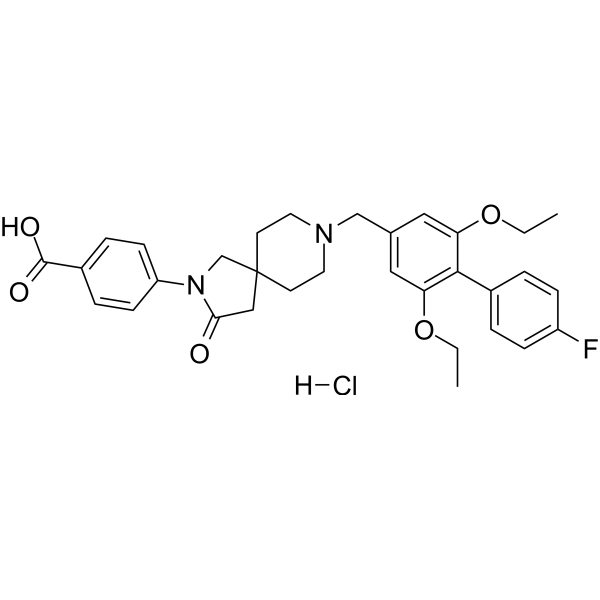 0 ImagesSSTR5 antagonist 2 hydrochloride is a highly potent, oral active and selective somatostatin (receptor) subtype 5 (SSTR5) antagonist and has potential for the research of type 2 diabetes mellitus (T2DM).
-
Angiopeptin TFA
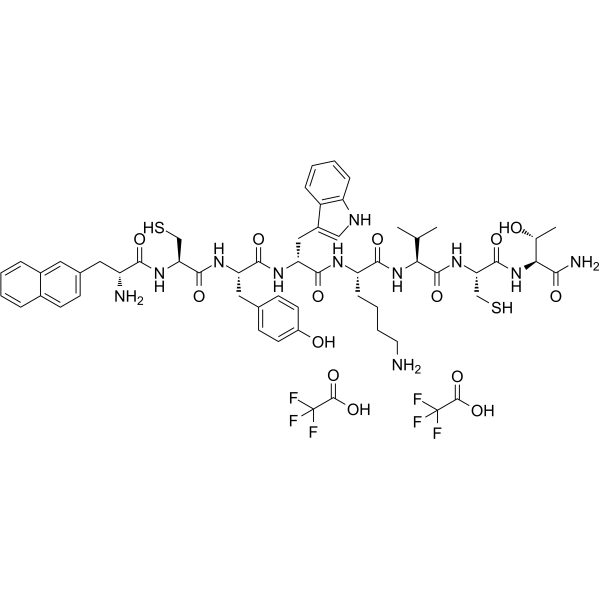 0 ImagesAngiopeptin TFA, a cyclic octapeptide analogue of somatostatin, is a weak sst2/sst5 receptor partial agonist with IC50 values of 0.26 nM and 6.92 nM, respectively. Angiopeptin TFA is a potent inhibitor of growth hormone release and insulin-like growth factor-1 (IGF-1) production. Angiopeptin TFA inhibits adenylate cyclase or stimulates extracellular acidification. Angiopeptin TFA has the potential for coronary atherosclerosis research.
-
L-817818
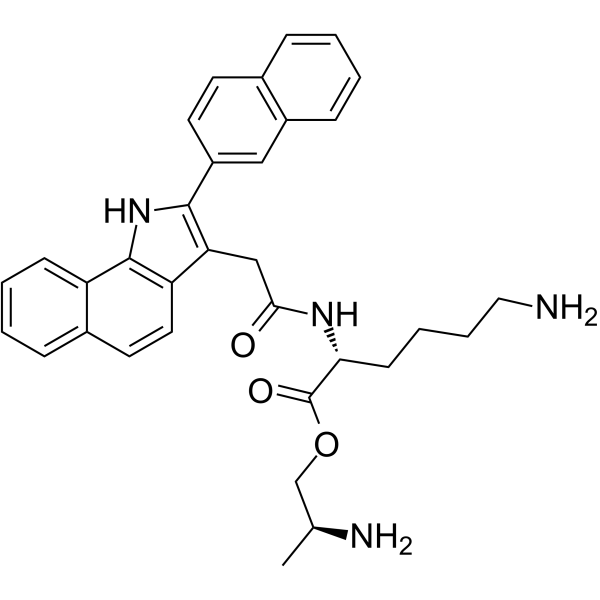 0 ImagesL-817818 is a potent and subtype-selective agonist of the somatostatin receptor. L-817818 provides a direct approach to defining somatostatin receptor physiological functions
-
MMC(TMZ)-TOC TFA
 0 ImagesCat. No.: HY-163317AMMC(TMZ)-TOC TFA has high binding affinity and selectivity for somatostatin receptor subtype-2 (SSTR2). MMC(TMZ)-TOC TFA targets delivery of TMZ to SSTR2-positive tumor cells. MMC(TMZ)-TOC TFA can be used for the research of cancer.
-
NNC 26-9100
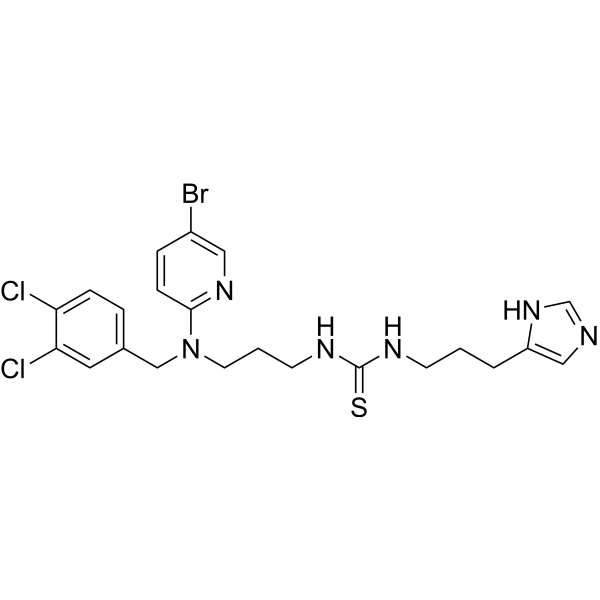 0 ImagesNNC 26-9100 is a selective somatostatin sst4 receptor full agonist (Ki: 6 nM, EC50: 2 nM). NNC 26-9100 decreases total soluble Aβ42, increases brain neprilysin activity and improves learning.
-
SSTR4 agonist 2
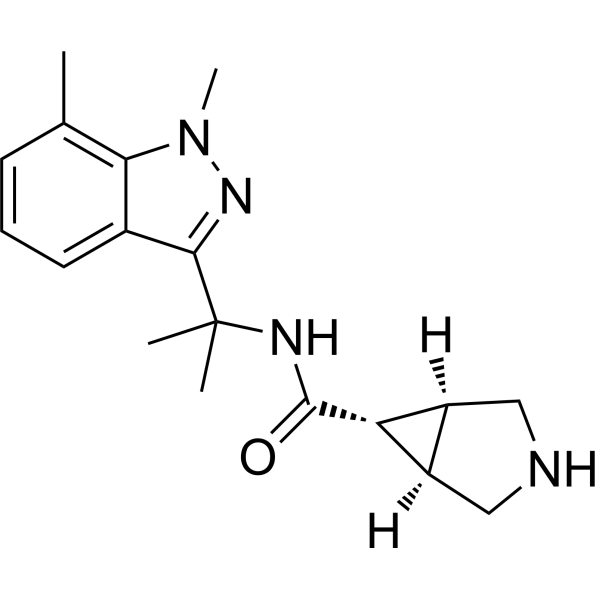 0 ImagesSSTR4 agonist 2 is a potent agonist of somatostatin receptor subtype 4 (SSTR4). SSTR4 pathway inhibits nociceptive and inflammatory processes. SSTR4 agonist 2 has the potential for the research of medical disorders related to SSTR4 (extracted from patent WO2014184275A1, compound 107).
-
Pasireotide pamoate
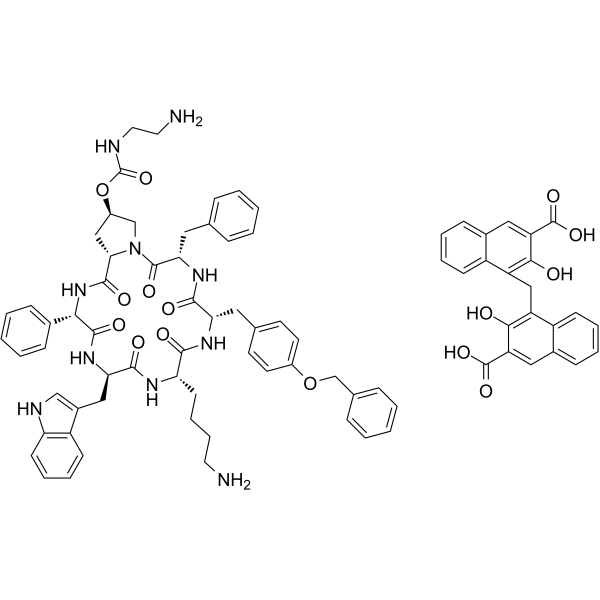 0 ImagesSynonyms: SOM230 pamoatePasireotide (SOM230) pamoate, a long-acting cyclohexapeptide somatostatin analogue, can improve agonist activity at somatostatin receptors (subtypes sst1/2/3/4/5, pKi=8.2/9.0/9.1/<7.0/9.9, respectively). Pasireotide pamoate exhibits antisecretory, antiproliferative, and proapoptotic activity.
-
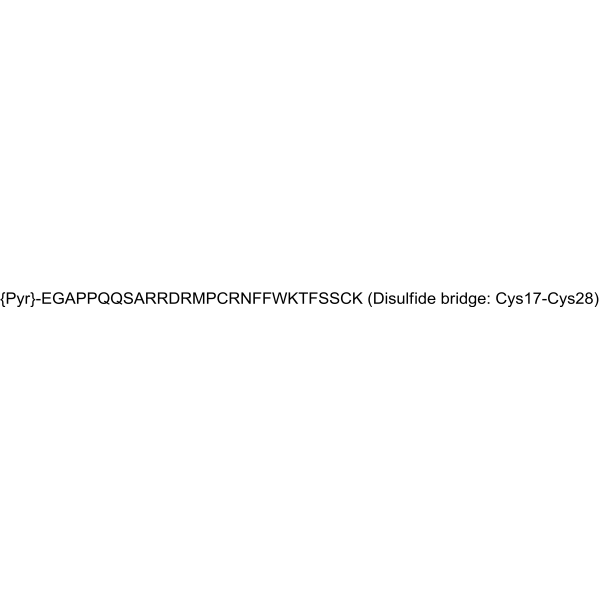
DOTA-EB-TATE
 0 ImagesCat. No.: HY-P10741CAS No.: 2151063-66-8DOTA-EB-TATE is composed of SST peptide derivative, DOTA-octreotate conjugated a common to an Evans blue analog (EB). DOTA-EB-TATE is a peptide drug conjugate (PDC) improves the pharmacokinetics of SSTR2 analogs and reduces PRRT toxicity. DOTA-EB-TATE can also be used for the synthesis/research of Radionuclide-Drug Conjugates (RDCs).
-
Veldoreotide
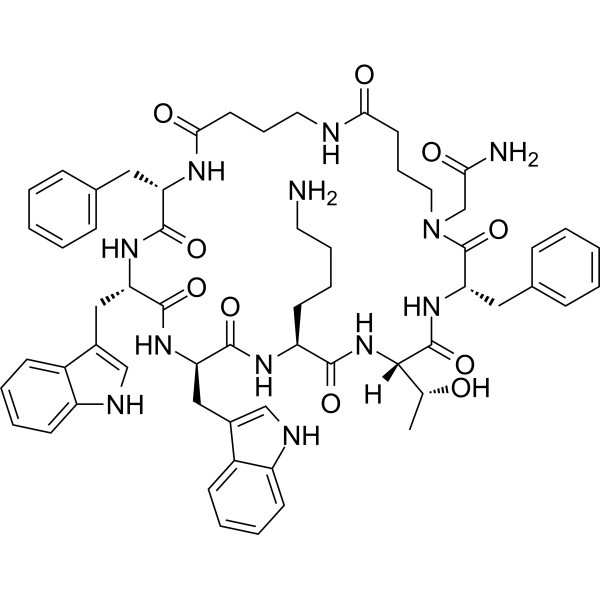 0 ImagesCat. No.: HY-P0024CAS No.: 252845-37-7Synonyms: DG3173; PTR-3173
-
(1R,1'S,3'R/1R,1'R,3'S)-L-054,264
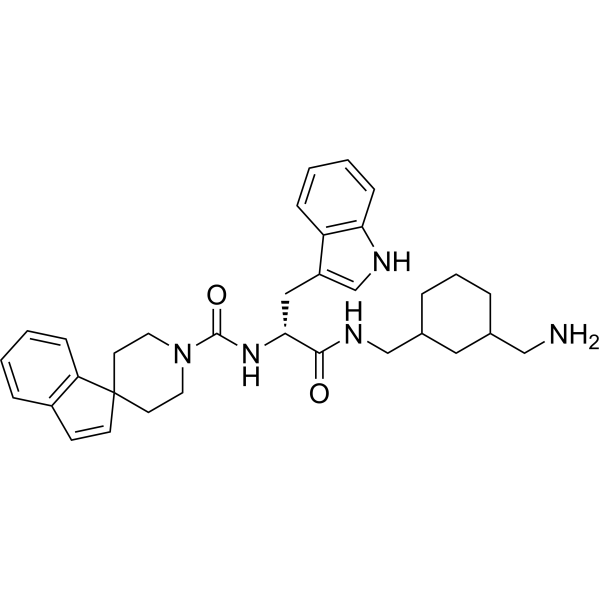 0 ImagesCat. No.: HY-108501CAS No.: 208706-12-1(1R,1'S,3'R/1R,1'R,3'S)-L-054,264 is a selective non-peptide human somatostatin receptor subtype 2 (sst2) agonist. (1R,1'S,3'R/1R,1'R,3'S)-L-054,264 can be used in the study of retinal neuromodulation.
-
BIM-23027
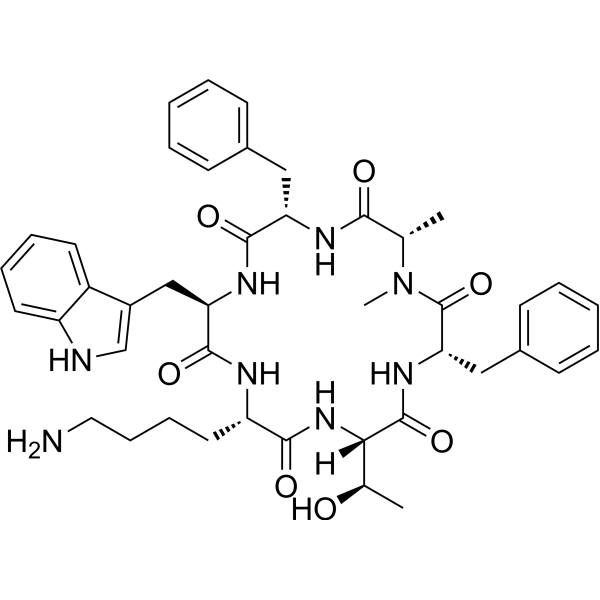 0 ImagesBIM-23027 is a selective agonist of sst2 receptor (EC50=0.32 nM), with similar effect to somatostatin (SRIF), a cyclic tetradecapeptide. BIM-23027 stimulates dopamine release, which is mediated by a Glu-dependent mechanism.
-
Cortistatin-29 (reduced)
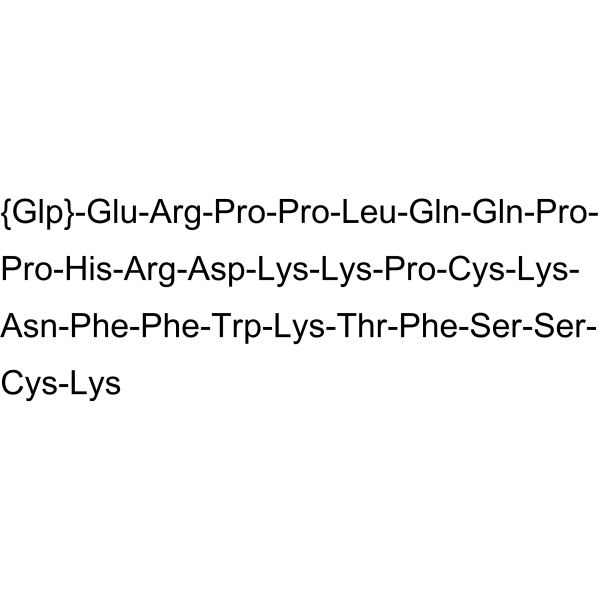 0 ImagesCat. No.: HY-P3618Purity: 98.12%Cortistatin-29 is a neuropeptide. Cortistatin-29 alleviates neuropathic pain. Cortistatin-29 binds all somatostatin (SS) receptor subtypes with high affinity and shows IC50 values of 2.8 nM, 7.1 nM, 0.2 nM, 3.0 nM, 13.7 nM for SSTR1, SSTR2, SSTR3, SSTR4, SSTR5, respectively. Cortistatin-29 shows anti-fibrotic effects.
-
[Tyr11]-Somatostatin
![[Tyr11]-Somatostatin](https://file.medchemexpress.com/product_pic/hy-p3062.gif "Click to View [Tyr11]-Somatostatin Product Detail") 0 Images[Tyr11]-Somatostatin is a neuroavtive peptide for proteomics research. Somatostatin is one of many neuroactive substances that influence retinal physiology.
0 Images[Tyr11]-Somatostatin is a neuroavtive peptide for proteomics research. Somatostatin is one of many neuroactive substances that influence retinal physiology.
-
NOTA-TATE
 0 ImagesNOTA-TATE is a somatostatin receptor 2 (SSTR2) binder. NOTA-TATE binds to SSTR2 to enable targeting of SSTR2-positive tumour cells for PET imaging. NOTA-TATE can be used for the research of neuroendocrine tumours.
-
Seglitide
 0 ImagesSynonyms: MK-678; L-363586Seglitide (MK-678) is an orally active, selective SSTR2 agonist and somatostatin analog. Seglitide also acts as a competitive Somatostatin receptor antagonist, with pA2 values of 6.50, 6.24 and 6.09 against SS14, SS25 and SS28, respectively. Seglitide produces only weak, transient inhibition of myocardial contractility in isolated right atria of guinea pigs. Seglitide inhibits glucagon secretion and reduces circulating insulin levels. Seglitide causes a sustained, reversible reduction in elevated systolic blood pressure in streptozotocin (HY-13753)-induced diabetic rats, but exerts no effect on spontaneously hypertensive rats. Seglitide induces membrane hyperpolarization and inhibits electrical excitability. Seglitide induces concentration-dependent contraction and significant desensitization in isolated distal colon of rats. Seglitide can be used in research related to hypertension complicated with insulin-dependent diabetes mellitus.
-
[Nle8] Somatostatin (1-28) TFA
![[Nle8] Somatostatin (1-28) TFA](https://file.medchemexpress.com/product_pic/hy-p3899a.gif "Click to View [Nle8] Somatostatin (1-28) TFA Product Detail") 0 ImagesCat. No.: HY-P3899APurity: 99.86%[Nle8] Somatostatin (1-28) TFA is a derivative of somatosttin (1-28) with norleucine replacing methionine in position 8. [Nle8] Somatostatin (1-28) TFA increases the amylase release.[Nle8] Somatostatin (1-28) TFA increases the cyclic AMP in pancreatic acini .
0 ImagesCat. No.: HY-P3899APurity: 99.86%[Nle8] Somatostatin (1-28) TFA is a derivative of somatosttin (1-28) with norleucine replacing methionine in position 8. [Nle8] Somatostatin (1-28) TFA increases the amylase release.[Nle8] Somatostatin (1-28) TFA increases the cyclic AMP in pancreatic acini .
-
NODAGA-LM3 TFA
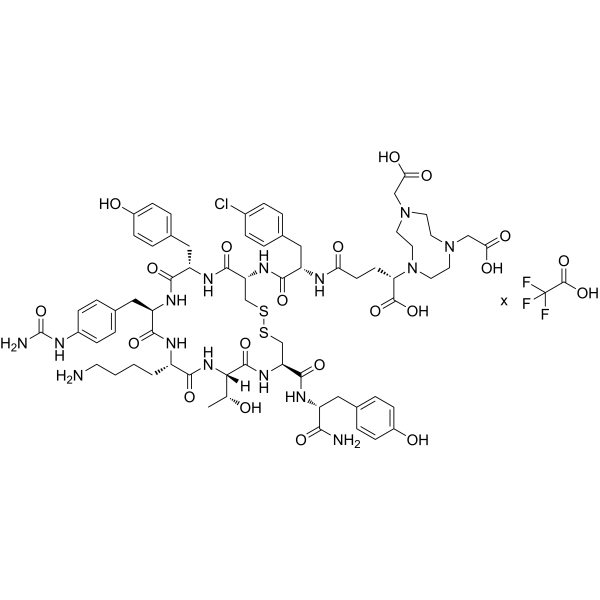 0 ImagesCat. No.: HY-P5362ANODAGA-LM3 TFA is a ligand that can cross the blood-brain barrier and targets somatostatin receptor SSTR2 with high affinity (IC50 = 1.3 nM). NODAGA-LM3 TFA does not trigger the internalization of SSTR2 and can inhibit agonist-induced internalization processes. NODAGA-LM3 TFA shows low uptake in normal tissues such as the liver and spleen, but high uptake in the lungs and blood pool. 68Ga-labeled NODAGA-LM3 TFA can serve as a PET imaging agent for well-differentiated neuroendocrine tumors, and is applied in studies related to small cell lung cancer and well-differentiated neuroendocrine tumors.
-
[Nle8] Somatostatin (1-28)
![[Nle8] Somatostatin (1-28)](https://file.medchemexpress.com/product_pic/hy-p3899.gif "Click to View [Nle8] Somatostatin (1-28) Product Detail") 0 ImagesCat. No.: HY-P3899CAS No.: 84768-30-9[Nle8] Somatostatin (1-28) is a derivative of somatosttin (1-28) with norleucine replacing methionine in position 8. [Nle8] Somatostatin (1-28) increases the amylase release.[Nle8] Somatostatin (1-28) increases the cyclic AMP in pancreatic acini .
0 ImagesCat. No.: HY-P3899CAS No.: 84768-30-9[Nle8] Somatostatin (1-28) is a derivative of somatosttin (1-28) with norleucine replacing methionine in position 8. [Nle8] Somatostatin (1-28) increases the amylase release.[Nle8] Somatostatin (1-28) increases the cyclic AMP in pancreatic acini .




